
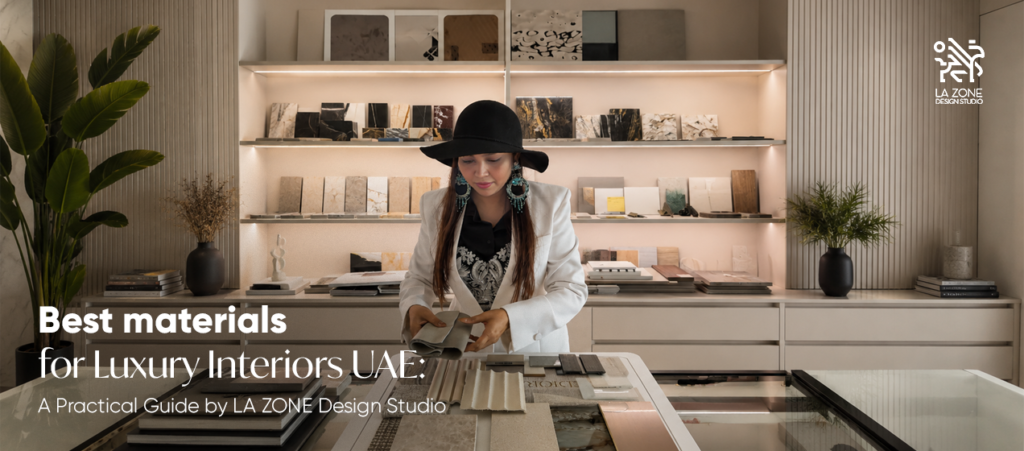
Introduction
Luxury interiors are not made by simply adding expensive furniture, marble floors, or decorative lighting. A truly premium space feels balanced, comfortable, and well thought out. Every surface, texture, finish, and detail has a purpose.
In the UAE, this becomes even more important. Homes and commercial spaces here are designed for a lifestyle that is refined, modern, and often highly functional. Large windows, open layouts, air-conditioned interiors, strong sunlight, dust, humidity, and daily usage all affect how materials perform over time.
That is why choosing the best materials for luxury interiors UAE is not just about appearance. It is about selecting materials that look elegant, age well, feel good to use, and suit the climate and lifestyle of the space.
At LA ZONE Design Studio, material selection is treated as a key part of the design process. The right material can completely change the mood of a room. The wrong one can make even an expensive interior feel incomplete or difficult to maintain.
This guide covers the materials that work best for luxury interiors in the UAE and explains how they can be used with purpose.
Why Material Selection Matters in Luxury Interiors
When people think of luxury interiors, they often think of marble, gold accents, imported furniture, chandeliers, and large spaces. But real luxury is more subtle than that.
It is in the way a stone slab is matched.
It is in the way wood adds warmth to a room.
It is in the way lighting brings out the texture of a wall.
It is in the way materials work together without looking forced.
A luxury interior should not feel heavy or overdone. It should feel composed.
In UAE homes, material selection also needs to be practical. A beautiful fabric must still be easy to maintain. A wooden panel must be suitable for air-conditioned spaces. A stone floor must be durable enough for daily use. A metal finish must not look dated after a few months.
This is where professional design guidance makes a difference. LA ZONE Design Studio focuses on materials that support both the visual quality and the long-term function of a space.
1. Natural Stone for a Timeless Luxury Look
Natural stone remains one of the most preferred choices for luxury interiors. It brings richness, depth, and character that artificial materials often cannot fully replicate.
Marble, travertine, limestone, granite, and onyx are commonly used in high-end interiors across the UAE. Each stone has its own personality. Marble feels elegant and classic. Travertine feels warm and grounded. Onyx creates drama when used with lighting. Granite is stronger and more practical for heavy-use areas.
Natural stone works beautifully for:
- Living room flooring
- Feature walls
- Staircases
- Bathroom walls
- Vanity counters
- Dining backdrops
- Entrance lobbies
- Console tops
However, stone should be selected carefully. Not every marble is suitable for every area. Some stones are more porous and need sealing. Some show stains easily. Some work better on walls than floors.
Luxury is not just about using stone. It is about how the stone is used.
The slab size, vein direction, joint placement, edge profile, polish level, and lighting all affect the final result. A poorly installed expensive stone can look average. A carefully detailed stone can make the entire space feel premium.
2. Porcelain Slabs for Beauty and Durability
For many modern UAE interiors, large-format porcelain slabs are a very smart choice. They offer the look of marble, stone, concrete, or metal but are usually easier to maintain.
Porcelain is strong, stain-resistant, moisture-resistant, and suitable for high-traffic spaces. This makes it useful for homes, apartments, offices, retail spaces, and hospitality interiors.
Porcelain slabs work well for:
- Kitchen countertops
- Bathroom walls
- Shower areas
- Flooring
- TV feature walls
- Commercial reception areas
- Outdoor-connected indoor spaces
For clients who want the look of marble but do not want heavy maintenance, porcelain can be a practical alternative. It gives a clean and seamless finish, especially in contemporary interiors.
In many projects, LA ZONE Design Studio uses materials like porcelain not as a compromise, but as a performance-driven luxury finish. When used correctly, it can look refined, minimal, and very high-end.
3. Wood Veneer for Warmth and Comfort
Luxury interiors should not feel cold. This is why wood is so important.
In the UAE, many premium interiors use stone, glass, metal, and large open spaces. Wood helps balance these materials by adding warmth and softness. It makes a space feel more personal and comfortable.
Premium wood veneer is commonly used for:
- Wall panels
- Wardrobes
- Bedroom backdrops
- TV units
- Doors
- Ceiling details
- Study rooms
- Walk-in closets
- Custom furniture
Walnut, oak, ash, teak, and smoked veneers are popular choices. Darker woods create a formal and rich look. Lighter woods make spaces feel calm, open, and modern.
The biggest thing to remember is quality. Wood veneer must be selected, treated, and installed properly. Poor joinery can lead to uneven finishes, swelling, warping, or visible gaps.
In a luxury interior, wood should look integrated into the architecture. It should not feel like a surface added at the end. The grains, grooves, polish, handles, lighting, and surrounding materials must all work together.
4. Metal Accents for a Refined Finish
Metal details can make an interior look polished, but only when they are used with control.
Brass, bronze, champagne gold, brushed nickel, matte black, and stainless steel are common choices in luxury interiors. These finishes can be used to highlight furniture, frame panels, define partitions, or add detail to doors and wardrobes.
Metal accents are useful for:
- Door handles
- Wardrobe profiles
- Mirror frames
- Furniture legs
- Stair railings
- Ceiling trims
- Kitchen shutters
- Decorative screens
- Lighting fixtures
The mistake many people make is overusing shiny metal. Too much gold or reflective detailing can make a space look loud. A more refined approach is to use softer finishes such as brushed brass, antique bronze, or champagne metal.
The metal finish should also connect with the rest of the space. For example, if bronze is used in a TV wall profile, it can be repeated subtly in handles, lighting, or furniture legs. This creates continuity without making the design look repetitive.
5. Textured Wall Finishes for Depth
Plain painted walls can work in some spaces, but luxury interiors often need more depth. Textured wall finishes help create that layered look.
Popular wall finish options include:
- Lime plaster
- Microcement
- Venetian plaster
- Textured paint
- Fabric panels
- Fluted wood panels
- Stone cladding
- Leather panels
- Acoustic panels
These finishes add character without making the room feel crowded. They also work beautifully with lighting. A textured wall creates soft shadows, which makes the space feel more alive.
Microcement and lime plaster are especially suitable for modern luxury interiors. They create a seamless and calm look, especially in living rooms, bathrooms, corridors, and bedrooms.
The key is balance. Not every wall needs to be treated. One well-selected wall with the right finish can have more impact than covering the entire room with different textures.
6. Luxury Fabrics for Softness and Comfort
A room may have beautiful flooring, wall panels, and lighting, but if the fabrics feel ordinary, the space will still feel incomplete.
Fabrics affect comfort more than people realize. Sofas, curtains, cushions, rugs, headboards, and dining chairs all shape the way a room feels.
Luxury fabric options include:
- Velvet
- Bouclé
- Linen blends
- Suede
- Leather
- Chenille
- Jacquard
- Performance fabrics
In the UAE, fabric selection should consider sunlight, dust, air-conditioning, and regular cleaning. Some fabrics look beautiful in a sample but are difficult to maintain in daily life.
For family homes, performance fabrics are often a good choice. They look premium but are easier to clean and more practical for regular use. For formal areas, velvet, suede, or textured weaves can create a richer look.
Curtains also play a big role. Sheers can soften daylight. Blackout curtains add privacy and comfort. Layered drapery can make a room feel more finished and elegant.
7. Glass for Openness and Light
Glass is widely used in UAE interiors because it helps create openness, brightness, and visual connection. But luxury interiors require more than basic clear glass.
Different glass options include:
- Fluted glass
- Tinted glass
- Bronze glass
- Smoked glass
- Frosted glass
- Clear tempered glass
- Back-painted glass
- Smart glass
Fluted and tinted glass are especially useful when privacy is needed without blocking light. Smoked or bronze glass can add a premium look to wardrobes, bars, partitions, and display units.
Glass works well in:
- Walk-in wardrobes
- Internal partitions
- Office cabins
- Shower enclosures
- Display cabinets
- Sliding doors
- Staircase railings
The frame, thickness, hardware, edge detail, and installation quality matter a lot. If the detailing is poor, glass can make a space look unfinished. When detailed correctly, it adds lightness and sophistication.
8. Flooring Materials That Set the Base
Flooring is one of the biggest visual decisions in an interior. It sets the tone for the entire space.
For luxury interiors in the UAE, common flooring materials include:
- Marble
- Travertine
- Porcelain slabs
- Engineered wood
- Terrazzo
- Microcement
- Carpet for selected areas
Marble and porcelain are strong choices for open living areas because they create a grand and seamless look. Engineered wood works well in bedrooms, private lounges, and study areas where warmth is more important. Microcement gives a calm and modern finish for clients who prefer understated luxury.
The right flooring depends on the design style. A classic villa may need marble with detailed borders. A modern apartment may look better with large-format porcelain. A soft contemporary home may use travertine or wood for a warmer feel.
Flooring should never be selected in isolation. It must work with the furniture, ceiling, wall finishes, and lighting plan.
9. Bespoke Joinery for a Finished Look
Custom joinery is one of the clearest signs of a well-designed luxury interior.
Wardrobes, kitchens, TV units, vanities, bars, libraries, wall panels, and display shelves are often made specifically for the space. This is where detailing becomes very important.
Common joinery materials include:
- Marine plywood
- MDF with veneer
- PU finish
- Laminate
- Acrylic
- Lacquered glass
- Metal profiles
- Leather panels
- Fluted panels
- Natural veneer
In luxury interiors, joinery should feel seamless. Doors should align properly. Handles should feel good to use. Storage should be practical. Lighting should be integrated cleanly. Gaps and edges should be controlled.
This is one area where execution matters as much as design. Even the best concept can look weak if the joinery is not handled properly.
LA ZONE Design Studio gives importance to design coordination and execution quality so that the final result looks refined, not improvised.
10. Sustainable Materials for Long-Term Value
Luxury today is also about responsibility. Many clients in the UAE are now looking for interiors that are healthier, longer-lasting, and more efficient.
Sustainable material choices can include:
- Low-VOC paints
- Certified wood
- Recycled-content surfaces
- Natural fabrics
- Durable finishes
- Energy-efficient lighting
- Water-efficient bathroom fittings
- Locally sourced materials where suitable
Sustainable luxury does not mean the space has to look simple or basic. It means the materials are chosen with more awareness. A material that lasts longer, needs less replacement, and supports better indoor air quality is a better investment.
For homes, this is especially important because people spend long hours indoors. The right materials can improve comfort, reduce maintenance, and make the space healthier over time.
How to Choose the Best Materials for Luxury Interiors UAE
Before selecting any material, ask these practical questions:
1. Where will it be used?
A bathroom, kitchen, bedroom, lobby, and living room all have different requirements. A material that works beautifully on a bedroom wall may not be suitable for a wet area.
2. How much use will the space get?
A formal sitting room can use more delicate finishes. A family lounge needs stronger and easier-to-maintain materials.
3. Does it suit the design language?
Every material should support the overall mood. Modern, classic, minimal, warm luxury, and hotel-inspired interiors all need different palettes.
4. Will it age well?
Some materials look good only when they are new. Luxury interiors need materials that remain beautiful over time.
5. Can it be executed properly?
Some finishes need skilled installation. If the execution team is not experienced, the final result may not match the design.
LA ZONE Design Studio’s Approach to Luxury Materials
LA ZONE Design Studio approaches luxury interiors with a clear understanding that materials are not just decorative elements. They are part of the architecture, mood, function, and experience of the space.
The studio focuses on:
- Material selection
- Space planning
- Interior detailing
- Lighting coordination
- Custom furniture
- Joinery design
- Finish quality
- Site execution
This approach helps create spaces that feel complete. Every material is selected based on how it looks, how it performs, and how it connects with the rest of the design.
A stone wall should connect with the lighting. A wooden panel should connect with the flooring. A metal profile should connect with the furniture. A fabric should support the comfort of the room.
When everything works together, the space feels effortless.
Final Thoughts
The best materials for luxury interiors in the UAE are not always the most expensive materials. They are the materials that suit the space, climate, lifestyle, and design vision.
Natural stone brings timelessness.
Porcelain brings durability.
Wood brings warmth.
Metal brings refinement.
Glass brings openness.
Texture brings depth.
Fabric brings comfort.
Sustainable materials bring long-term value.
When these materials are selected with care and executed properly, the result is not just a beautiful interior. It is a space that feels personal, practical, elegant, and built to last.
For clients looking for refined interiors in the UAE, LA ZONE Design Studio brings together design thinking, material knowledge, and execution control to create spaces that feel luxurious without feeling forced.
FAQ
1. What are the best materials for luxury interiors in the UAE?
The best materials for luxury interiors UAE include natural stone, porcelain slabs, premium wood veneer, brushed metal, textured wall finishes, luxury fabrics, glass, engineered stone, microcement, and sustainable low-VOC materials.
2. Is marble good for luxury interiors in the UAE?
Yes, marble is a strong choice for luxury interiors. It works well for flooring, bathrooms, staircases, feature walls, and entrance areas. However, it needs proper sealing, installation, and maintenance.
3. What is a practical alternative to marble?
Large-format porcelain slabs are a practical alternative to marble. They can give a similar look while being easier to maintain and more resistant to stains, moisture, and scratches.
4. Which flooring is best for luxury villas in the UAE?
Marble, travertine, porcelain slabs, engineered wood, and microcement are popular choices. The best option depends on the design style, usage, and maintenance expectations.
5. Are wood finishes suitable for UAE interiors?
Yes, wood veneer and engineered wood can work well in UAE interiors when selected and installed properly. They are commonly used for wall panels, wardrobes, doors, ceilings, and custom furniture.