
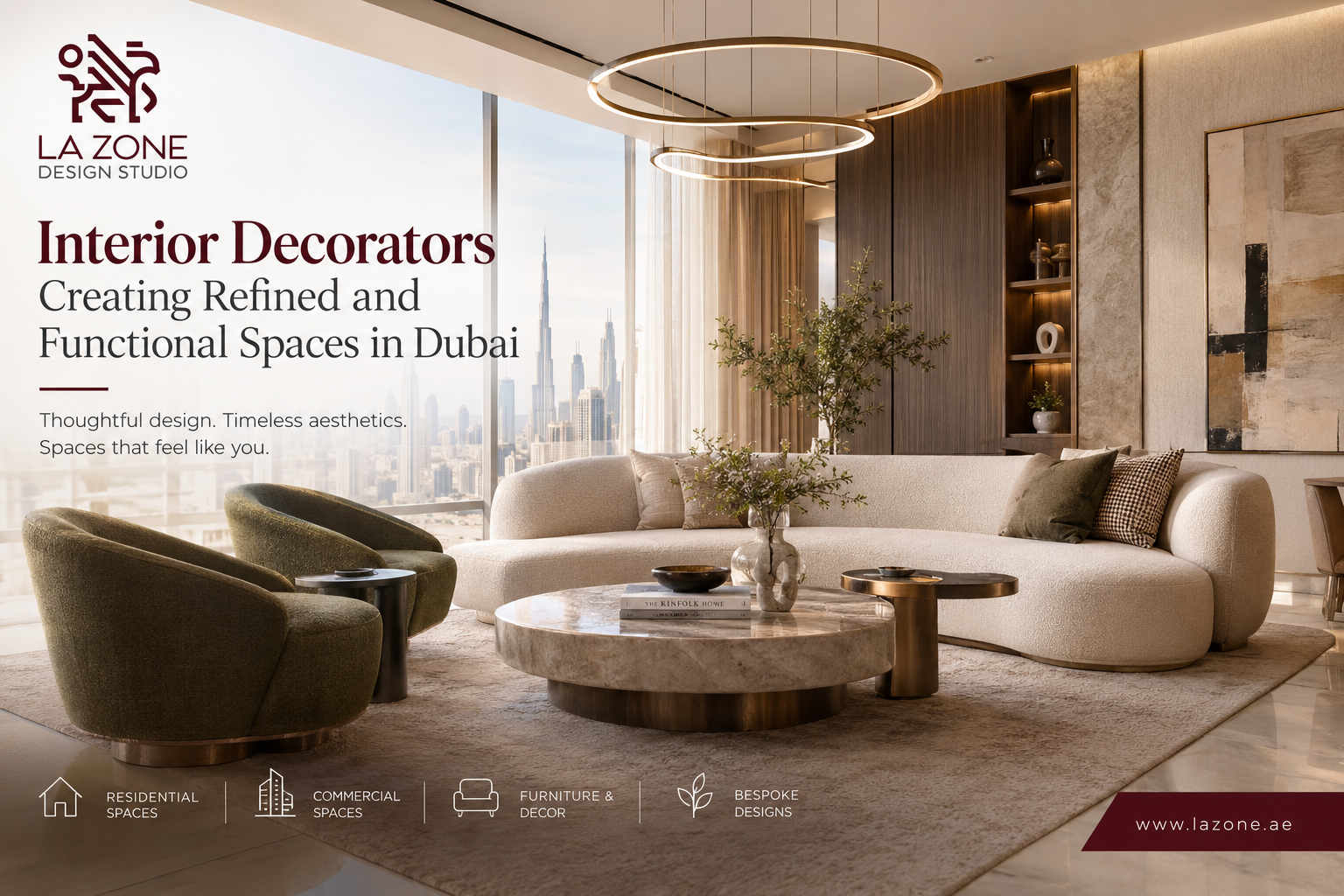
Dubai is a city known for architecture, luxury, innovation, and sophisticated lifestyles. As homes, offices, hospitality spaces, retail environments, and commercial properties continue to evolve, interiors have become an important part of how people experience a space. A beautifully designed interior is no longer simply about choosing attractive furniture or matching colors. It is about creating an environment where aesthetics, comfort, functionality, identity, and quality come together naturally. This is where professional interior decorators play an important role.
Interior decorators help transform ordinary spaces into environments that feel considered, cohesive, and visually refined. Their work involves much more than selecting decorative objects. From understanding the character of a space to creating a suitable color palette, selecting materials, coordinating furniture, planning lighting, and adding finishing details, interior decorators help bring a complete design vision together.
For homeowners in Dubai, the right interior approach can make a residence feel more personal and comfortable. For businesses, it can help create a stronger identity and a more memorable experience for customers and visitors. Whether the project involves a luxury villa, apartment, office, retail store, restaurant, hotel, or lifestyle space, thoughtful interior decoration can significantly influence how the environment looks and functions.
What Do Interior Decorators Actually Do?
Interior decorators focus on the visual and experiential layers of a space. While interior design can involve extensive spatial planning, technical drawings, architectural coordination, and construction-related decisions, decoration focuses strongly on how the completed environment is presented, furnished, layered, and experienced.
Professional interior decorators begin by understanding the purpose of the space and the preferences of the client. A family home may require warmth, comfort, storage, and flexibility, while a corporate office may require a sophisticated environment that communicates professionalism and brand identity. A restaurant may need an atmosphere that encourages customers to stay longer, while a luxury retail store may require carefully planned displays and visual focal points.
Once the purpose is established, decorators can work with elements such as furniture, fabrics, colors, textures, artwork, lighting, accessories, window treatments, rugs, and decorative features. Each element needs to relate to the others. When these choices are made without an overall direction, a space can easily feel disconnected. When they are carefully coordinated, even simple elements can create a strong visual effect.
The role of interior decorators is therefore not simply to make a room look attractive. It is to create visual harmony and ensure that individual elements contribute to one complete experience.
Why Interior Decoration Matters in Dubai
Dubai has a diverse architectural and design landscape. Modern apartments, large villas, luxury developments, offices, restaurants, boutiques, hotels, and mixed-use properties all have different requirements. At the same time, clients often expect interiors to reflect contemporary international standards while still feeling personal.
This makes interior decoration an important part of the overall project.
A well-decorated space can establish a sense of character from the moment someone enters. The color palette can influence the mood, furniture can define how people use the room, lighting can create depth, and materials can introduce warmth or sophistication. Small details can also have a major influence on the final appearance.
Dubai interiors often involve premium materials and carefully selected finishes. However, luxury does not necessarily mean using more of everything. A sophisticated interior usually depends on balance. The right combination of materials, furniture, lighting, textures, and open space can create an environment that feels elevated without becoming visually overwhelming.
Interior Decorators and the Importance of Space Planning
Although decoration is often associated with styling, successful decoration begins with an understanding of the available space. Furniture cannot be selected properly without considering room dimensions, circulation, door openings, windows, architectural features, and the way people will use the room.
A large living room, for example, may require furniture that establishes different zones without making the space feel empty. A smaller apartment may require carefully scaled furniture that provides comfort without restricting movement. A formal dining area needs appropriate circulation around the table, while a bedroom requires enough space around the bed and storage areas for comfortable everyday use.
This is why interior decorators need to understand proportion and scale.
Furniture that looks beautiful in a showroom may not necessarily work in a particular room. The size, shape, color, material, and placement must all be considered in relation to the architecture. When furniture is correctly scaled, the entire space feels more balanced.
Choosing the Right Color Palette
Color is one of the most powerful tools available to interior decorators. It can create warmth, introduce sophistication, highlight architectural details, or make a space feel more open.
A successful color palette does not necessarily depend on using many colors. In many luxury interiors, a controlled palette creates a calmer and more sophisticated appearance. Neutral tones can provide a timeless foundation, while carefully selected accent colors can introduce personality.
Warm beige, cream, stone, taupe, soft grey, earthy tones, muted greens, deep browns, and other natural shades can be combined with materials such as marble, wood, metal, glass, and textured fabrics.
However, color should always be considered in relation to natural and artificial lighting. A shade that looks soft during the day may appear completely different under artificial lighting at night. Professional interior decorators consider these changes when developing a color scheme.
The Role of Materials and Textures
Materials bring depth to an interior. Two rooms can use a similar color palette but feel completely different depending on the materials and textures selected.
Wood can introduce warmth and natural character. Stone can create a sense of permanence and luxury. Glass can contribute to openness, while metals can add a contemporary detail. Upholstery, curtains, rugs, cushions, and other textiles can soften harder architectural surfaces.
Texture is particularly important in refined interiors because it prevents a neutral palette from feeling flat. A combination of smooth stone, natural wood, soft upholstery, textured walls, and subtle decorative details can create visual depth without requiring excessive decoration.
Interior decorators carefully balance these materials so that the room feels layered but not crowded.
Furniture Selection for a Complete Interior
Furniture is one of the most visible components of an interior. It also has a direct relationship with comfort and functionality. Choosing furniture only because it looks attractive can create problems later if it does not suit the room or the lifestyle of the occupants.
A professional approach considers the scale, shape, material, color, comfort, durability, and placement of every major furniture piece.
In a living room, sofas and chairs need to encourage conversation while allowing comfortable circulation. In a dining room, the table and chairs need to work with the dimensions of the room. Bedrooms require furniture that supports relaxation and storage. Offices require seating and work surfaces that correspond with the way employees use the space.
Bespoke furniture can provide another level of flexibility because individual pieces can be developed around specific dimensions and design requirements. This can be especially useful for luxury residences and projects where standard furniture does not achieve the desired result.
Lighting Can Transform an Interior
Lighting is often underestimated when decorating a space. Yet even the most carefully selected furniture and materials can lose their impact if the lighting is poorly considered.
Interior decorators look at lighting as part of the overall atmosphere. Ambient lighting provides general illumination, task lighting supports specific activities, and accent lighting can highlight artwork, architectural features, furniture, or decorative objects.
Layered lighting can also make an interior more adaptable. A living room may require brighter lighting during everyday activities but a softer atmosphere during the evening. Bedrooms may benefit from warm, subtle lighting, while workspaces require more focused illumination.
Decorative lighting fixtures themselves can also become design elements. Pendant lights, chandeliers, wall lights, floor lamps, and sculptural fixtures can contribute to the visual identity of a room.
Interior Decorators for Luxury Homes
Luxury residential interiors require more than expensive materials. They require coordination.
A luxury home should feel sophisticated without losing the comfort associated with everyday living. Every room should have its own character while still belonging to the same overall design language.
Interior decorators can help coordinate the living room, dining area, bedrooms, dressing rooms, family spaces, entertainment areas, and other parts of the residence. The result should feel connected rather than like a collection of individually decorated rooms.
In a luxury villa, this approach becomes particularly important because the scale of the property can create many different spaces. Consistent materials, colors, lighting principles, and furniture styles can create continuity throughout the home.
At the same time, individual rooms can have their own identity through artwork, furniture arrangements, textures, and accent elements.
Interior Decorators for Commercial Spaces
Commercial interiors need to communicate more than style. They need to support the purpose of the business.
An office should create an environment that reflects the company’s identity while supporting employees and visitors. A retail space needs to present products effectively and create a clear customer journey. A restaurant needs to create an atmosphere while allowing staff and customers to move comfortably. A hospitality space needs to balance visual appeal with comfort and operational requirements.
For this reason, commercial decoration should be connected to the brand.
Colours, materials, furniture, lighting, artwork, signage, and decorative features can all contribute to brand recognition. A thoughtfully designed environment can make the business feel more distinctive and memorable.
Creating a Strong First Impression
The entrance of a property is often the first opportunity to establish its character. This is particularly important in luxury residences, offices, hospitality spaces, and commercial properties.
An entrance does not need to be filled with decoration to make an impact. Strong proportions, carefully selected materials, appropriate lighting, furniture, artwork, and a clear focal point can be enough.
Lobbies and reception areas are especially important because they combine arrival, movement, waiting, and perception. The design needs to feel visually refined while remaining intuitive and comfortable.
Interior decorators can use these spaces to establish the design language that continues throughout the property.
The Importance of Personalisation
One of the biggest advantages of working with professional interior decorators is the opportunity to create a space that feels personal.
A beautiful interior should not look like a copy of a showroom or a social media image. It should respond to the people who use it.
For residential projects, this could mean incorporating preferred colours, artwork, collections, furniture styles, cultural references, or personal objects. For commercial spaces, personalisation can take the form of brand elements, corporate colours, custom furniture, unique displays, or architectural features.
Personalisation gives an interior identity.
The goal is not to follow every design trend. Trends can provide inspiration, but a strong interior should remain relevant beyond a particular season. Timeless proportions, quality materials, thoughtful furniture, and carefully selected decorative elements can help a space maintain its appeal for years.
Interior Decoration and Long-Term Value
Interior decoration can also contribute to the perceived value of a property. A well-maintained and thoughtfully designed space often creates a stronger impression than an environment where furniture, colours, and finishes have been selected without coordination.
For property owners, developers, and investors, this can be especially relevant. Interior quality can influence how a property is presented to potential buyers, tenants, clients, or guests.
However, long-term value is not simply about appearance. Materials should be suitable for their intended use, furniture should be durable, and decorative choices should be practical to maintain.
A successful interior combines visual refinement with everyday usability.
Why an Integrated Design Approach Matters
Interior decoration is most effective when it works alongside architecture, interior design, planning, and execution rather than being treated as an isolated final step.
LaZone approaches architecture and interiors as part of a unified design system, with attention to planning, proportion, materiality, detailing, execution, and long-term usability. This integrated approach helps maintain consistency between the original concept and the completed environment.
For clients, this can make the overall process clearer. Instead of making isolated decisions about furniture, finishes, lighting, and decoration, the different layers of the project can be considered together.
The result is a space where architecture, furniture, materials, lighting, and decorative details support the same design direction.
How to Choose the Right Interior Decorators
Choosing interior decorators should begin with understanding the requirements of the project. Every project has different expectations, so the right professional should have experience relevant to the type and scale of the space.
Look at previous projects and pay attention to more than photographs. Consider whether the spaces appear functional, whether materials are coordinated, whether furniture is appropriately scaled, and whether the overall design feels cohesive.
Communication is another important factor. A decorator should be able to understand your preferences while also explaining why certain decisions may work better than others.
It is also important to discuss the project scope clearly. Furniture, accessories, lighting, artwork, window treatments, custom pieces, installation, and final styling may all form part of the decoration process. Defining these elements at the beginning helps avoid confusion later.
Most importantly, choose an approach rather than simply a style. A strong interior decorator should be able to adapt design principles to your property rather than reproducing the same look in every project.
LaZone: Bringing Precision and Refinement to Interiors
LaZone is a UAE-based architecture and interior design studio that works across residential, commercial, and mixed-use environments. Its approach combines architecture, interior design, planning, visualisation, project coordination, and execution under a structured design direction.
Its interior design approach focuses on layout, materiality, lighting, detailing, comfort, functionality, and everyday experience. The studio describes its interiors as being developed with refined materiality and meticulous detailing, with an emphasis on creating cohesive and elevated environments.
This integrated perspective is valuable for clients who want more than surface-level decoration. It allows the interior to be considered as part of the larger architectural and lifestyle experience.
Final Thoughts
Interior decorators play an important role in shaping how a space looks, feels, and functions. Their work brings together colour, furniture, materials, textures, lighting, artwork, accessories, and styling to create a cohesive environment.
In Dubai, where expectations for residential and commercial spaces are often high, thoughtful interior decoration can help create spaces that feel sophisticated without becoming excessive. The strongest interiors balance beauty with usability, luxury with comfort, and individuality with timeless design.
Whether you are planning a luxury villa, apartment, office, retail environment, hospitality project, or another type of space, the right interior approach can transform the way people experience it.
Professional interior decorators do not simply fill a room with beautiful objects. They create relationships between the elements of a space. When furniture, lighting, materials, colours, architecture, and personal identity work together, the result becomes more than decoration. It becomes an environment designed around the way people live, work, interact, and experience space.
For clients seeking refined interiors in Dubai, a structured and integrated design process provides a strong foundation for achieving a space that is visually distinctive, comfortable, functional, and designed to remain relevant over time.