
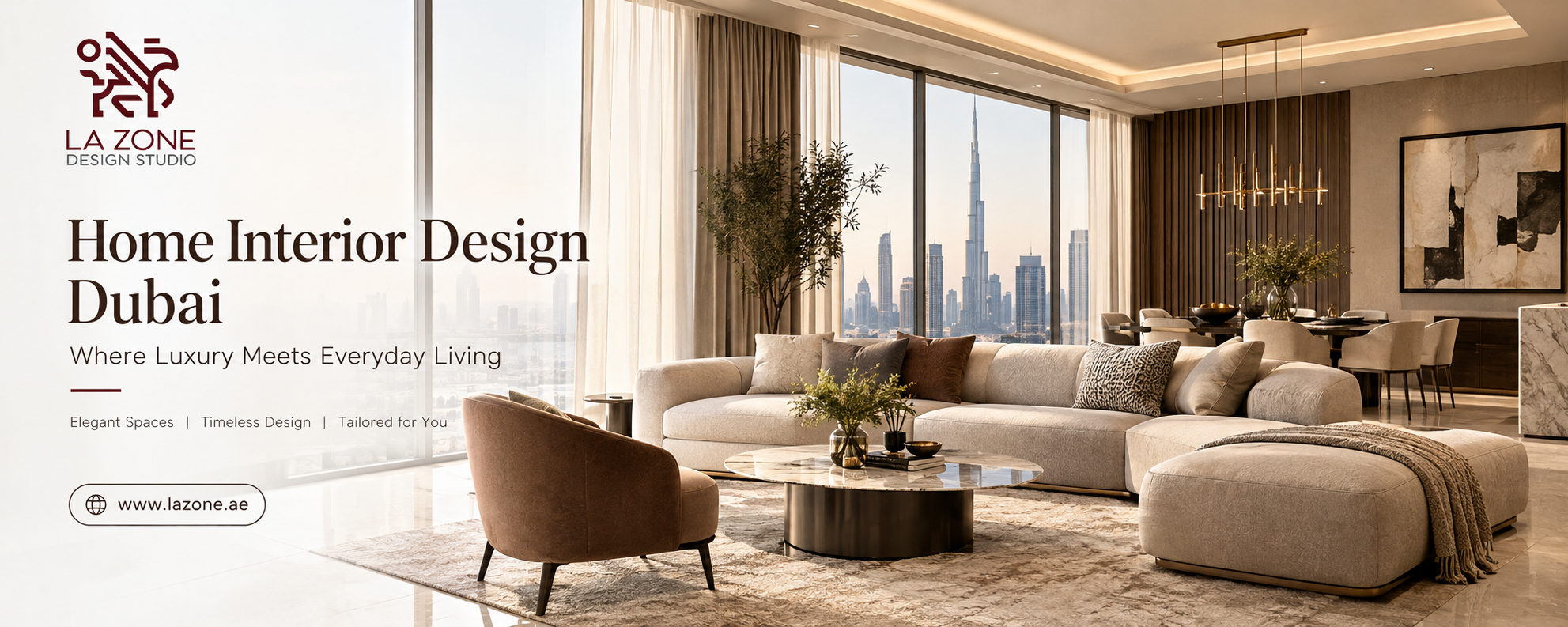
Home is more than a place to live. It is a personal environment that reflects your lifestyle, preferences, comfort, and aspirations. In a city such as Dubai, where contemporary architecture meets international design influences, homeowners increasingly look for interiors that combine sophistication with everyday practicality. Professional Home Interior Design Dubai services help transform ordinary residential spaces into thoughtfully planned environments that balance visual appeal, functionality, and lasting quality.
From spacious villas and contemporary apartments to penthouses and family residences, every home has its own character and requirements. The right interior design approach considers how people use their spaces, how natural light enters each room, how furniture supports daily activities, and how materials contribute to the overall atmosphere. These decisions work together to create a home that feels cohesive rather than simply decorated.
At LA ZONE Design Studio, interior design is approached through careful planning, material selection, spatial organisation, and attention to detail. The objective is to create interiors that respond to individual lifestyles while maintaining a refined design identity. Whether you are planning a complete home transformation or updating selected rooms, a considered design strategy can improve both the appearance and experience of your living environment.
Why Home Interior Design Matters in Dubai
Dubai offers a diverse residential landscape, including modern apartments, waterfront residences, family villas, and expansive luxury properties. Each property presents different opportunities and challenges, making professional planning an important part of achieving a successful interior.
A well-designed home should support daily routines while creating a welcoming atmosphere. The living room should encourage relaxation and conversation, the kitchen should provide efficient movement and storage, and bedrooms should promote comfort and privacy. Every area should contribute to the overall functionality of the property.
Professional home interior design Dubai services bring these requirements together through a structured design process. Instead of selecting furniture, colours, and finishes independently, designers develop a coordinated concept that considers the relationship between every element.
Combining Beauty with Everyday Functionality
An attractive interior is valuable, but appearance alone cannot make a home comfortable. Furniture that obstructs movement, insufficient storage, poorly positioned lighting, and unsuitable materials can reduce the usefulness of even the most visually impressive space.
Functional interior design begins by understanding how residents use their homes. Families may require flexible living areas, additional storage, and durable finishes, while professionals working from home may need dedicated workspaces and suitable lighting. Homeowners who frequently entertain guests might prioritise spacious dining areas, comfortable seating, and an inviting entrance.
By understanding these requirements early, designers can create layouts that support real lifestyles while maintaining visual balance.
Reflecting Dubai’s Contemporary Lifestyle
Dubai’s residential interiors often combine international design influences with individual preferences. Some homeowners prefer contemporary minimalism, while others appreciate classic detailing, warm natural materials, or expressive statement pieces.
The objective is not to follow every design trend. It is to establish an interior identity that suits the property’s architecture and the people living in it. A carefully selected colour palette, consistent material finishes, appropriate furniture proportions, and layered lighting can create an environment that feels sophisticated without becoming overwhelming.
Understanding Luxury Home Interior Design
Luxury home interior design is not defined exclusively by expensive furniture, imported stone, or decorative accessories. True luxury comes from the quality of planning, the suitability of materials, the precision of detailing, and the comfort of the finished environment.
A luxurious home should feel considered from the moment someone enters. The transition between rooms should be natural, furniture should be appropriately scaled, and lighting should complement the architecture. Materials should work together to create a consistent visual experience, while practical features remain easy to use.
Selecting a Design Style That Reflects Your Personality
Choosing a design style is one of the first important decisions in a residential project. The style establishes the foundation for furniture, materials, lighting, colours, and decorative details.
Contemporary interiors often feature clean lines, uncluttered layouts, and carefully balanced materials. Modern luxury interiors may incorporate natural stone, refined metal accents, custom joinery, and sculptural lighting. Minimalist interiors prioritise simplicity, open space, and a restrained colour palette. Classic interiors may introduce decorative mouldings, symmetrical arrangements, and timeless furniture profiles.
A successful design can also combine elements from different styles. For example, a contemporary living room can incorporate warm timber, textured fabrics, and subtle classical detailing to create a more personal atmosphere.
The important consideration is consistency. Each room can have its own character, but the overall home should feel connected through complementary materials, colours, and design principles.
Choosing Materials for Long-Term Quality
Material selection has a significant influence on the appearance, performance, and maintenance of an interior. Natural stone, porcelain, timber, glass, metal, and textured fabrics each offer different visual and practical qualities.
For example, porcelain surfaces can provide durability and relatively straightforward maintenance in frequently used areas. Natural stone can create a distinctive appearance, although its maintenance requirements depend on the stone type and finish. Timber introduces warmth, while carefully selected metal details can add contrast and definition.
In Dubai, material choices should also account for sunlight exposure, indoor cooling conditions, humidity in relevant areas, and the intended use of each room. Window treatments, upholstery, flooring, and finishes should be selected with these conditions in mind.
A well-planned luxury home interior design project balances appearance with durability, maintenance, and suitability. This approach helps create spaces that remain attractive and practical over time.
Essential Elements of Home Interior Design
Every successful residential interior combines several elements that work together. Space planning, colour, furniture, lighting, storage, and finishing details should be considered as parts of one complete design rather than separate decisions.
Living Room Design for Comfort and Elegance
The living room often serves as the main gathering space within a home. It may be used for family activities, relaxation, entertaining visitors, or enjoying views of the surrounding neighbourhood.
A successful living room begins with a layout that encourages conversation and provides comfortable movement. Sofa dimensions, coffee table placement, television positioning, and circulation routes should be considered before furniture is purchased.
The colour palette can help establish the room’s atmosphere. Neutral shades create a flexible foundation, while deeper tones, textured fabrics, artwork, and selected accent colours introduce character. A statement light fixture or carefully designed feature wall can add visual interest without overwhelming the space.
Lighting should accommodate different activities. General illumination provides overall visibility, task lighting supports reading or other activities, and accent lighting highlights artwork, architectural features, or decorative objects.
The result should be a living room that looks refined while remaining comfortable enough for everyday use.
Bedroom Interiors Designed for Relaxation
Bedrooms require a different approach because their primary purpose is rest and privacy. A successful bedroom interior should feel calm, organised, and comfortable.
Bed placement influences the entire layout. Designers should consider movement around the bed, access to wardrobes, window positions, and the relationship between bedside furniture and lighting. Storage should be sufficient without making the room feel crowded.
Soft textures, suitable curtains, coordinated bedding, and a balanced colour palette can contribute to a relaxing environment. Warm lighting is often useful for creating a comfortable evening atmosphere, while adjustable reading lights improve functionality.
For luxury bedrooms, upholstered headboards, custom wardrobes, carefully selected finishes, and integrated lighting can create a distinctive appearance. However, these elements should support the room’s purpose rather than distract from it.
Kitchen and Dining Area Planning
The kitchen is one of the most functionally demanding areas of a home. Its design must accommodate food preparation, storage, cleaning, appliances, and movement between work areas.
A practical kitchen layout considers the relationship between the sink, cooking area, refrigerator, preparation surfaces, and storage. Cabinet interiors should be organised according to the items residents use most frequently.
Material selection is equally important. Countertops, cabinet finishes, flooring, and splashbacks should withstand regular use and suit the household’s maintenance preferences. Lighting should provide clear visibility over preparation surfaces while contributing to the overall atmosphere.
Dining areas should connect naturally with the kitchen and living spaces where the layout permits. Table size, chair clearance, pendant lighting, and circulation routes need careful consideration. These details help create a dining environment that works for daily meals as well as social occasions.
Bathroom Design with a Refined Finish
Bathrooms benefit from a combination of practical planning, durable materials, and thoughtful lighting. The layout should provide comfortable access to the shower, vanity, storage, and other fixtures without unnecessary obstruction.
Porcelain tiles, suitable natural stone, quality fittings, and coordinated finishes can create a refined appearance. However, waterproofing, drainage, ventilation, and slip resistance must remain priorities throughout the design and construction process.
Vanity storage helps maintain an organised environment, while mirrors and appropriate lighting improve everyday usability. In larger bathrooms, a carefully planned combination of textures, lighting, and fixtures can create a more spa-inspired experience.
Smart Space Planning for Modern Homes
Space planning is one of the most important foundations of successful Home Interior design Dubai projects. Even a large property can feel uncomfortable if its rooms are poorly organised, while a smaller apartment can feel spacious when its layout is efficient.
Designers begin by assessing room dimensions, architectural features, access points, windows, and existing services. They then consider furniture requirements, storage needs, privacy, and the movement of residents between different areas.
Creating a Sense of Space in Apartments
Apartments often require efficient use of available floor area. Built-in storage, appropriately scaled furniture, multifunctional pieces, and carefully planned lighting can help maximise usability.
Open layouts may improve the relationship between living, dining, and kitchen areas. However, zoning is still important. Rugs, lighting arrangements, furniture positioning, and subtle changes in materials can define separate functions without creating unnecessary barriers.
Mirrors can help reflect available light, while lighter colours and consistent flooring may create a more continuous visual effect. These techniques should be adapted to the apartment’s actual dimensions and natural lighting conditions rather than applied as universal rules.
Designing Villas for Privacy and Flow
Villas often include multiple living zones, bedrooms, guest areas, outdoor connections, staircases, and service spaces. Their design requires careful coordination to ensure that each area serves its purpose while contributing to the overall residential experience.
Formal entertaining areas may need to remain separate from private family spaces. Bedrooms should provide suitable privacy, while entrances and circulation routes should connect different parts of the villa naturally.
Outdoor terraces, gardens, and balconies can also influence the interior layout. Where appropriate, window placement, furniture orientation, and material choices can strengthen the connection between indoor and outdoor environments.
For larger homes, consistency is particularly important. A common design language across the entrance, living areas, bedrooms, and corridors helps the property feel unified without making every room identical.
The Importance of Lighting and Colour
Lighting and colour influence how a room looks, feels, and functions. Their relationship should be considered early in the design process because both affect the appearance of materials, furniture, and architectural features.
Using Natural Light Effectively
Natural light can make interiors feel more open and welcoming. Window treatments should balance daylight, privacy, and glare control according to the room’s orientation and use.
In Dubai, direct sunlight can be intense in certain spaces and seasons. Appropriate curtains, blinds, glazing considerations, and furniture placement can help manage heat and glare while maintaining a comfortable indoor environment.
Designers should also consider how daylight changes throughout the day. A material that appears warm in morning light may look different under evening illumination, making it useful to assess samples in the intended setting.
Creating Balance with Artificial Lighting
A well-designed lighting scheme uses several layers rather than relying on one central fixture. General lighting provides overall illumination, task lighting supports specific activities, and accent lighting creates depth by highlighting selected details.
Pendant lights can define dining areas, wall lights can soften bedroom interiors, and concealed lighting can emphasise architectural lines or joinery. Dimmers and adjustable controls may provide additional flexibility where appropriate.
Colour selection should complement the lighting scheme. Warm neutrals, earthy shades, muted greens, and soft greys can create different atmospheres depending on their combination with materials and furnishings.
The goal is to achieve visual balance and practical illumination throughout the home.
Integrating Smart Technology into Residential Interiors
Modern homes increasingly incorporate technology to improve comfort, convenience, security, and energy management. When planned correctly, these systems can complement the interior design without creating unnecessary visual clutter.
Smart lighting controls, automated curtains, integrated entertainment systems, climate controls, and selected security features may be included according to the homeowner’s requirements.
Technology should be considered during the planning stage rather than added after the interior is complete. This allows designers and technical teams to coordinate wiring, control locations, ceiling details, equipment storage, and access requirements.
The most effective smart-home solutions are those that residents can use comfortably. Systems should be selected according to actual needs, ease of operation, maintenance requirements, and compatibility with the property’s technical infrastructure.
Sustainable Choices for Luxury Residential Interiors
Sustainable design can improve the long-term performance of a home while supporting responsible material use. It does not require sacrificing elegance or comfort.
Durable materials, efficient lighting, appropriate window treatments, and well-planned ventilation can contribute to a more considered residential environment. Furniture designed for long-term use may also reduce the need for frequent replacement.
Selecting materials with suitable maintenance requirements is another important consideration. A finish that requires constant specialised care may not be appropriate for every household, even if it looks attractive initially.
Design flexibility also supports longevity. Neutral foundational finishes, adaptable furniture arrangements, and timeless architectural details can make it easier to update accessories and soft furnishings without undertaking a complete renovation.
A thoughtful luxury home interior design strategy should therefore consider not only the immediate visual result but also the property’s ongoing use, maintenance, and adaptability.
The Home Interior Design Process at LA ZONE Design Studio
A structured design process helps homeowners understand how their project will progress from initial ideas to a completed interior. It also helps align expectations, design decisions, technical requirements, and execution.
Consultation and Requirement Assessment
The process begins by understanding the property, the homeowner’s preferences, the intended use of each room, and the project’s practical requirements. Existing layouts, architectural conditions, storage needs, and budget considerations help establish the design direction.
Concept Development and Space Planning
The next stage involves developing the overall concept, room layouts, furniture arrangements, and material direction. The design team considers how spaces connect and how the proposed interior responds to the architecture.
Material Selection and Detailed Design
Once the concept is established, materials, colours, lighting, joinery, and other finishes can be developed in greater detail. Technical drawings and specifications help communicate design intent and support coordination with contractors and suppliers.
Execution Coordination and Final Review
During implementation, coordination is important to ensure that approved details are followed and potential site issues are addressed. Material installation, joinery dimensions, lighting positions, and finishing quality should be reviewed against the agreed design.
At LA ZONE Design Studio, the broader approach connects interior design with planning, technical coordination, and execution considerations. You can explore the studio’s interior design services to learn more about its design approach.
Common Home Interior Design Mistakes to Avoid
Even a promising design concept can lose its impact when important practical considerations are overlooked. One common mistake is purchasing furniture before measuring the room and confirming the layout. Oversized furniture can obstruct movement, while undersized pieces may make a large room feel unbalanced.
Another mistake is selecting too many competing materials or statement features. Multiple feature walls, decorative ceilings, patterned floors, and bold furnishings can create visual confusion when they are not coordinated.
Poor lighting planning can also affect the finished result. A room that depends entirely on overhead lighting may feel flat, while insufficient task lighting can make kitchens, workspaces, and reading areas less practical.
Storage is another frequent concern. Without adequate space for everyday belongings, even an attractive home can quickly become cluttered.
Finally, homeowners should avoid treating design and execution as completely separate activities. Drawings, measurements, material approvals, technical coordination, and installation details all contribute to the quality of the final interior.
Addressing these issues early helps create a more cohesive, comfortable, and durable home.
How to Choose the Right Interior Design Studio in Dubai
Selecting an interior design studio is an important decision because the team will help shape both the appearance and functionality of your home. Homeowners should look beyond attractive photographs and consider the studio’s design process, understanding of residential requirements, and approach to technical coordination.
Reviewing relevant project portfolios can help establish whether the studio’s design sensibility matches your preferences. It is also useful to discuss the scope of services, project stages, expected deliverables, material approval procedures, and responsibilities during execution.
Clear communication is essential. The design team should understand your lifestyle and explain how its recommendations respond to your requirements. Budget considerations, maintenance expectations, and realistic timelines should be discussed before major decisions are finalised.
LA ZONE Design Studio approaches interiors through an integrated design philosophy that emphasises spatial clarity, refined materials, and attention to execution. For homeowners planning a new residence or a complete interior transformation, this structured approach can help align the design concept with the practical demands of everyday living.
Conclusion: Transform Your Home with Thoughtful Interior Design
Creating a beautiful home requires more than selecting attractive furniture or premium finishes. It involves understanding the people who live in the space, planning rooms carefully, choosing suitable materials, coordinating lighting, and ensuring that every design element contributes to a cohesive result.
Professional Home Interior design Dubai services can help homeowners make informed decisions throughout this process. From compact apartments to expansive villas, a considered design strategy improves functionality while establishing a distinctive residential identity.
Luxury home interior design is most successful when elegance and practicality work together. Comfortable furniture, efficient storage, balanced lighting, carefully selected finishes, and precise detailing can create a home that feels sophisticated without compromising everyday convenience.
LA ZONE Design Studio brings together design thinking, spatial planning, material selection, and execution awareness to support refined residential environments. By approaching every project according to its architecture and the homeowner’s needs, the studio aims to create spaces that feel personal, functional, and enduring.
If you are planning to redesign your apartment, upgrade your villa, or create a new residential interior in Dubai, begin with a clear understanding of your priorities and explore how a coordinated design approach can help bring your vision to life.
Frequently Asked Questions
What is included in home interior design in Dubai?
Home interior design may include space planning, furniture layouts, colour schemes, material selection, lighting design, ceiling and wall details, storage planning, custom joinery, and coordination with execution teams. The exact scope depends on the property and project requirements.
How can I achieve luxury home interior design without excessive decoration?
Focus on good proportions, quality materials, comfortable furniture, layered lighting, practical storage, and consistent detailing. A restrained design with carefully selected statement features can feel more refined than a room filled with competing decorative elements.
How do I choose the right interior design style for my home?
Consider your lifestyle, preferred colours, maintenance expectations, architectural features, and the atmosphere you want to create. Reviewing references can help establish a direction, but the final design should be adapted to your property and personal requirements.
Is professional interior design suitable for small apartments?
Yes. Professional planning can improve furniture placement, storage, lighting, and circulation in smaller apartments. Multifunctional furniture, built-in storage, and a coordinated colour palette can help make limited space more practical.
Why is material selection important in residential interiors?
Materials influence the appearance, durability, comfort, and maintenance of a home. Selecting suitable finishes for each room helps maintain design consistency while supporting the property’s everyday requirements.
When should I contact an interior design studio?
It is generally beneficial to involve an interior design studio early, particularly when planning a new property or a major renovation. Early coordination helps align layouts, electrical points, lighting, ceilings, furniture, and material choices before implementation begins.