
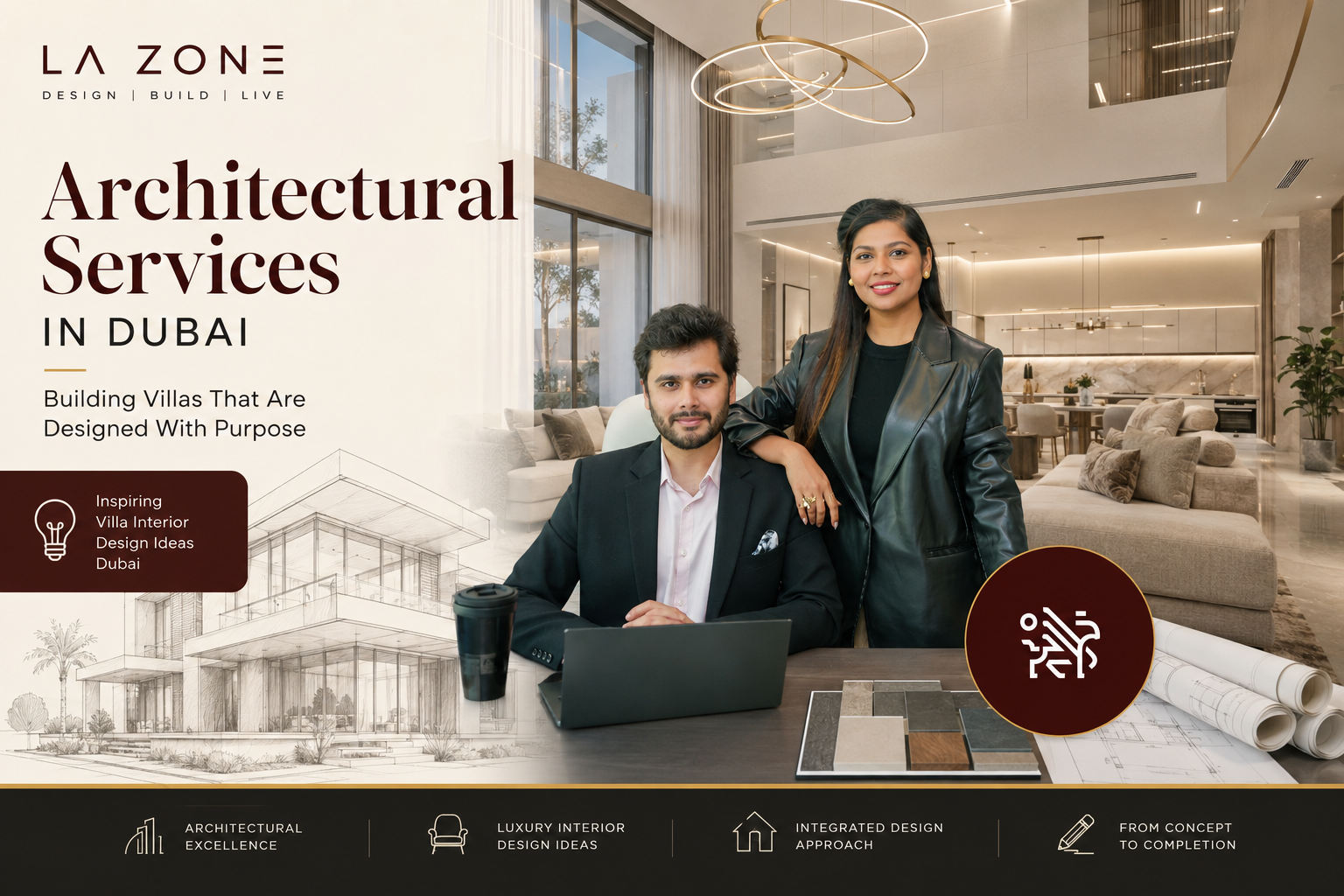
Dubai is not a market where ordinary design survives for long. Homes, villas, hospitality spaces, commercial interiors, and lifestyle environments are expected to perform at a higher level. They must look premium, function efficiently, reflect the client’s lifestyle, and remain relevant for years. This is where professional architectural services become essential.
A well-designed villa is not created by choosing a beautiful elevation or selecting expensive materials. It begins with planning, zoning, proportion, structure, circulation, natural light, privacy, and execution clarity. When architecture and interiors are treated as one connected process, the final space feels more resolved, more luxurious, and easier to live in.
For homeowners, developers, and investors in the UAE, the right architectural direction can define the long-term value of a property. It impacts how the space is experienced, how efficiently it is built, how maintenance-friendly it remains, and how strongly it stands apart in a competitive real estate market.
What Are Architectural Services?
Architectural services include the complete planning and design process required to shape a building from concept to completion. This can include space planning, design concepts, elevation design, technical drawings, structural coordination, material planning, authority-related documentation, site coordination, and execution support.
In a city like Dubai, architectural services go beyond visual design. Every project must consider lifestyle, climate, plot potential, regulations, privacy, luxury standards, and long-term usability. A villa, for example, needs more than a grand façade. It needs a strong internal layout, correct room hierarchy, smooth movement, practical service zones, and a clear relationship between indoor and outdoor spaces.
Good architecture answers three core questions:
Does the space work well?
Does the design reflect the client’s lifestyle?
Can the concept be executed with precision?
When these questions are answered early, the project becomes more controlled, efficient, and commercially sound.
Why Architectural Services Matter in Dubai
Dubai has a fast-moving design and real estate ecosystem. Villas are no longer judged only by size or location. Buyers and homeowners now look at planning quality, design intelligence, lifestyle features, material detailing, and the overall experience of the space.
Professional architectural services help bring structure to this process. They ensure that every design decision is backed by logic, not guesswork. From the entrance sequence to the placement of private zones, every part of the villa must be planned with intent.
For example, a poorly planned villa may have large rooms but weak circulation. It may have a dramatic elevation but poor natural light. It may include expensive finishes but lack functional storage, privacy, or service access. These issues usually happen when architecture, interiors, and execution are handled separately.
An integrated approach reduces these gaps. It keeps the concept, planning, detailing, and site execution aligned from the beginning.
Key Elements of High-Quality Architectural Services
1. Site and Plot Understanding
Every strong project starts with understanding the plot. The orientation, access points, surrounding views, sun direction, privacy concerns, and possible zoning restrictions all influence the design. In Dubai, climate plays a major role. Designers must consider heat, glare, shaded outdoor areas, façade treatment, and practical use of terraces, gardens, balconies, and courtyards.
A good architectural plan does not force a design onto the plot. It responds to the plot intelligently.
2. Space Planning and Zoning
Zoning is one of the most important parts of villa architecture. Public, semi-private, and private areas must be clearly defined. Formal living spaces, family lounges, bedrooms, kitchens, staff areas, outdoor decks, parking, and service zones need the right hierarchy.
In luxury villas, zoning also shapes the experience. The entrance should create impact. Living spaces should feel open but controlled. Bedrooms should feel private. Outdoor areas should feel connected without compromising comfort.
This is where professional architectural services add measurable value. They create order before design details begin.
3. Elevation and Architectural Identity
A villa’s exterior should not be designed as a decorative skin. The elevation must connect with the internal planning, structural logic, material palette, and overall design language. Whether the direction is modern, minimal, classical, contemporary, or resort-inspired, the façade should feel balanced and purposeful.
In Dubai, where visual identity matters, the elevation often becomes a statement. But the strongest elevations are not overloaded. They are proportioned, disciplined, and aligned with the lifestyle of the client.
4. Interior and Architecture Integration
A major mistake in villa design is treating interiors as a separate phase after architecture is complete. This often leads to ceiling conflicts, awkward furniture placement, weak lighting plans, poor storage integration, and design compromises during execution.
Architecture and interiors should be planned together. Furniture layouts, wall panelling, lighting, false ceilings, air-conditioning routes, window positions, flooring patterns, and material transitions must be considered early.
This is especially important when exploring villa interior design ideas Dubai homeowners are interested in, such as double-height living areas, statement staircases, open kitchens, spa-style bathrooms, walk-in wardrobes, home offices, entertainment lounges, and indoor-outdoor seating zones.
Villa Interior Design Ideas Dubai Homeowners Can Consider
Dubai villas often demand a balance between luxury, comfort, and performance. The interiors should look premium, but they must also support daily living. Here are practical villa interior design ideas Dubai residents can use while planning a new home or renovation.
1. Create a Strong Arrival Experience
The entrance sets the tone for the entire villa. A well-designed foyer can include a sculptural console, feature wall, statement lighting, textured stone, or a framed view into the home. The goal is not to overcrowd the entrance but to create a clear first impression.
A strong arrival sequence also improves spatial flow. It helps separate the outside world from the private environment of the home.
2. Use Double-Height Spaces Carefully
Double-height living rooms are popular in Dubai villas, but they need careful planning. The scale must feel elegant, not empty. Lighting, wall finishes, curtains, artwork, and furniture proportions must all match the height of the space.
If planned well, a double-height area can become the central visual anchor of the villa. If handled poorly, it can feel cold, echo-heavy, and under-designed.
3. Connect Indoor and Outdoor Living
One of the strongest villa interior design ideas Dubai homeowners can use is to create a better connection between indoor and outdoor spaces. Large sliding doors, shaded decks, poolside lounges, garden seating, and semi-covered terraces can expand the way the villa is used.
However, this connection must consider privacy, heat, maintenance, and furniture durability. Outdoor living should be designed for real use, not just for renders.
4. Prioritize Smart Storage
Luxury homes need clean visual lines, but daily life requires storage. Walk-in wardrobes, concealed cabinets, kitchen storage, utility zones, linen closets, and display shelving must be planned from the beginning.
Good storage design keeps the villa clutter-free and improves the long-term functionality of the interiors.
5. Use Materials With Discipline
Dubai interiors often use marble, wood, metal, glass, textured paint, leather, and premium fabrics. The problem begins when too many materials compete in one space. A stronger approach is to create a controlled palette and use statement materials only where they matter.
Luxury is not about adding everything. It is about knowing what to highlight and what to keep restrained.
6. Plan Lighting in Layers
Lighting can make or break villa interiors. A luxury villa should not depend only on ceiling lights. It needs layered lighting, including ambient lighting, task lighting, accent lighting, wall washers, profile lights, chandeliers, floor lamps, and concealed lighting.
Each room should have different lighting moods. A family lounge, formal living room, bedroom, bathroom, and outdoor deck cannot follow the same lighting logic.
7. Design Kitchens as Lifestyle Spaces
In modern Dubai villas, kitchens are no longer hidden back-end areas. Many homeowners prefer open kitchens, show kitchens, breakfast counters, and connected dining zones. The kitchen must look refined while still performing efficiently.
Material durability, appliance placement, storage, ventilation, and movement flow are critical. A beautiful kitchen that does not function well becomes a daily inconvenience.
8. Make Bedrooms More Personal
Bedrooms should not be treated as generic hotel rooms. The layout should reflect the user’s lifestyle. Bed placement, wardrobe access, dressing areas, bathroom connection, reading corners, lighting controls, and material softness all contribute to comfort.
For master suites, the design can include a walk-in wardrobe, private lounge corner, vanity zone, and spa-inspired bathroom. The goal is privacy, comfort, and quiet luxury.
Architecture and Interior Design Should Work as One System
The best villas are not created in disconnected stages. Architecture, interior design, technical planning, and execution must work as one system. When these departments are aligned, the project becomes more efficient and the final result becomes more refined.
This integrated approach helps avoid common issues such as the following:
Poor furniture placement after construction
Lighting conflicts with ceiling design
AC vents disturbing interior aesthetics
Late-stage material changes
Weak coordination between drawings and site work
Expensive revisions during execution
Professional architectural services reduce these risks by bringing clarity early in the process.
Choosing the Right Architecture and Interior Design Studio in Dubai
Before choosing a design studio, clients should look beyond portfolio images. A strong studio should be able to explain the logic behind its planning, not just show attractive visuals.
Key points to evaluate include:
Understanding of villa planning
Experience with Dubai and UAE lifestyle needs
Ability to integrate architecture and interiors
Quality of technical drawings
Material and execution knowledge
Site coordination process
Design clarity from concept to handover
For villa projects, the design partner should be able to think about both vision and delivery. A concept is only valuable when it can be executed correctly on site.
The Future of Villa Design in Dubai
Villa design in Dubai is moving toward more personalised, efficient, and lifestyle-driven spaces. Homeowners want luxury, but they also want comfort, wellness, privacy, technology, and long-term usability.
Future-ready villas will focus on better natural light, smarter layouts, flexible rooms, indoor-outdoor living, wellness areas, energy-conscious planning, and integrated technology. Design will become less about decoration and more about intelligent living.
This shift makes architectural services even more important. The earlier the planning clarity begins, the stronger the final outcome becomes.
Final Thoughts
Strong architectural services are the foundation of every successful villa project. They bring structure, clarity, proportion, function, and execution control into the design process. In Dubai, where expectations are high and every detail matters, architecture cannot be treated as surface-level styling.
The best villas are designed with intent from day one. The layout works. The elevation has identity. The interiors feel connected. The materials are controlled. The lighting is layered. The outdoor spaces are usable. The final result feels refined, practical, and built for long-term value.
For homeowners exploring villa interior design ideas Dubai, the right starting point is not a mood board. It is a clear architectural vision supported by disciplined planning, integrated interiors, and precise execution.
That is how a villa becomes more than a beautiful property. It becomes a complete living experience.